7 min read
Why crypto payments are still missing a protection layer
Crypto made ownership direct and self-custody practical. Everyday payments need one more thing: a way to resolve a problem before a payment settles. Here is what that layer looks like, and what it does not do.
Crypto solved something traditional finance never fully did. You can hold your own money, move it without asking permission, and settle with anyone in the world in seconds. No bank sits between you and your balance, and a transfer, once confirmed, does not depend on anyone’s later approval. For ownership and self-custody, that is a real advance.
Payments are a different problem from ownership. Most everyday payments are not transfers between people who already trust each other. They are purchases from someone you have not met, deposits for work not yet delivered, and invoices from counterparties you are dealing with for the first time. In those moments the question is not only whether the money arrives. It is what happens if something goes wrong.
That second question is where crypto payments still fall short, and it is the reason many people who are comfortable holding crypto still reach for a card when they buy from a stranger. This article looks at why, what people actually expect from a payment, and what a protection layer built on crypto’s own terms can and cannot do.
Can you reverse a crypto payment?
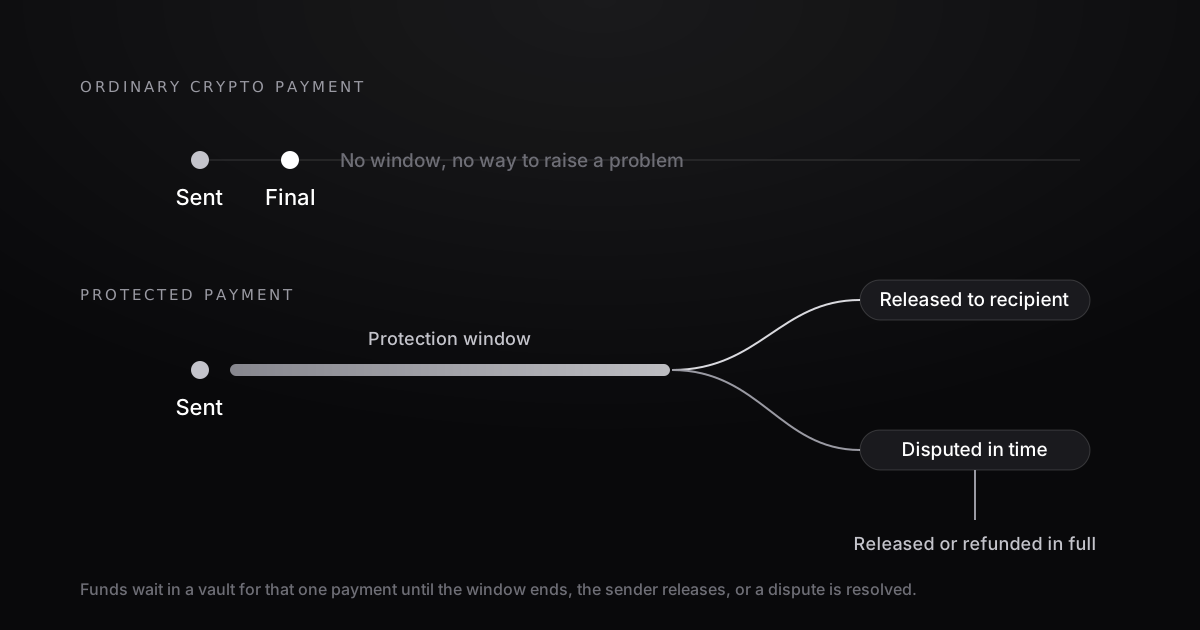
In almost every case, no. An ordinary crypto payment settles when it is sent. Once the transaction is confirmed, the funds belong to the recipient, and there is no built-in way to raise a problem, pause the payment, or bring it back. If the goods never ship, the service is never delivered, or the payment went to the wrong place, the payer is left to ask the recipient for a voluntary refund.
That is not a flaw in blockchains. Final settlement is a large part of why they are useful: a recipient can rely on money that cannot be pulled back weeks later, and nobody in the middle can quietly change the result. But it means the moment you pay and the moment the payment becomes final are the same moment, and for many payments that is too early.
What people are used to
People who pay with cards and bank transfers are used to having somewhere to go when a payment goes wrong. The mechanisms differ from system to system, and they are not always fast or fair, but the expectation is widespread: a purchase is not the end of the story if the other side does not hold up theirs.
That expectation does real work. It is part of why people are willing to pay a business they have never heard of, put down a deposit for work that has not started, or buy a digital product sight unseen. The protection is rarely used, but knowing it exists lowers the cost of trusting someone new.
Without some version of that expectation, crypto stays a better way to hold money than to spend it. People keep it for saving and for transfers between parties who already trust each other, and reach for something else when they buy from a stranger. Businesses that would happily accept stablecoins see customers hesitate at checkout for the same reason.
Why existing workarounds fall short
There are ways around the problem today, and each has a cost.
- Trusting the recipient. Paying only people and businesses you already trust works, but it is exactly what limits crypto to transfers between parties who know each other.
- Custodial escrow services. A company holds the funds until both sides are satisfied. It adds protection, but it also adds a custodian: your money sits in someone else’s account, under their policies, and you are trusting them with it.
- Platform balances. Marketplaces can hold buyers’ funds inside their own systems. That protects the purchase, but only inside that platform, and again by taking custody.
- Splitting payments into milestones. Paying in pieces reduces how much is at risk at once, but every piece is still final the moment it is sent.
What is missing is protection that does not require handing the money to someone else to hold.
A protection layer, not a custodian
The missing piece is a resolution layer that works on crypto’s own terms. Protected payments add one to the payments that need it, without taking custody of anyone’s wallet.
- The payer chooses to protect a payment and picks a protection window, from one hour to thirty days.
- That one payment moves into its own vault, controlled by the protocol’s rules rather than by either party’s wallet or by any company. The rest of the wallet is untouched.
- While the window is open, the payer can release the payment early, or open a dispute if something goes wrong.
- If nobody disputes it, the payment becomes available to the recipient when the window closes.
- If it is disputed, a designated arbiter reviews it and chooses one of two outcomes: refund the original payer or release the payment to the original recipient. Either side can also end the dispute in the other’s favour: the payer by withdrawing it, the recipient by refunding the payer.
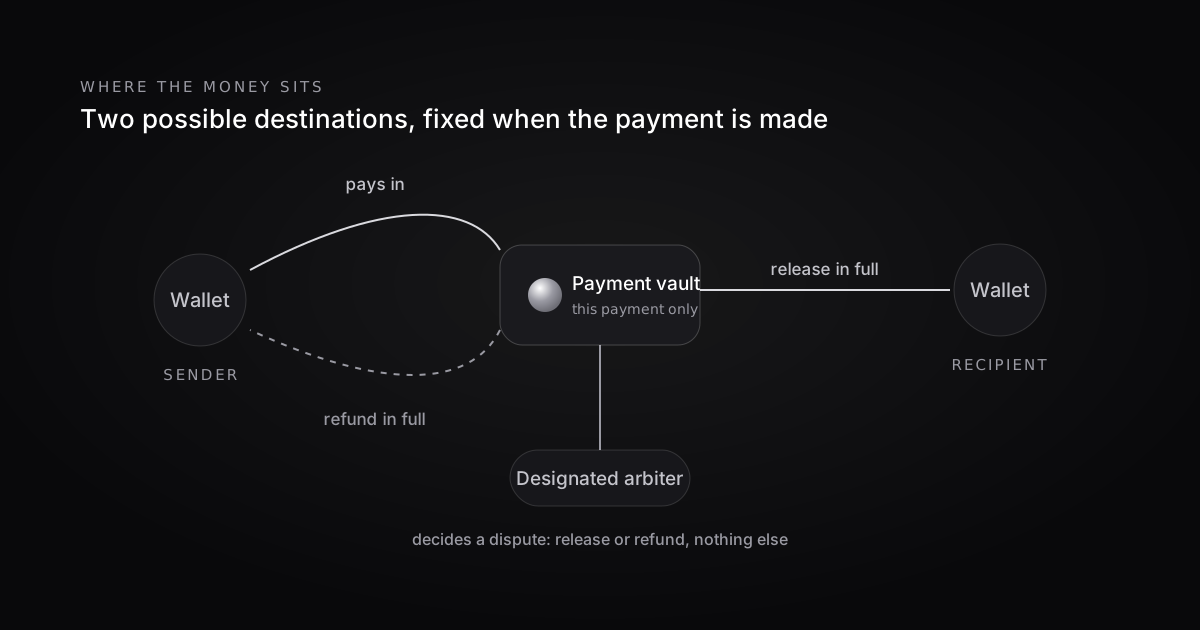
The arbiter decides between those two outcomes and nothing else. The arbiter never receives the funds, cannot send them anywhere else, and has no say over payments that were never disputed. The sender, recipient, amount, and protection window are fixed when the payment is created and cannot be changed afterwards by anyone.
How a dispute works
A dispute is not a request to a support desk. It is a structured case with a defined end.
The payer opens it before the protection window closes, giving a reason, a written account, and supporting evidence such as receipts, messages, or photos. From that moment the payment stays in its vault: the window closing does not release it, and nobody can move it until the dispute is resolved.
The recipient then responds in the same case, and gives their account without first seeing the payer’s, so each side’s story is its own. Submitted statements and files cannot be edited afterwards; a correction is added as a new statement, so the record stays complete. The designated arbiter reviews the case and settles the payment in full to one side.
That structure is useful to everyone involved. The payer knows exactly what happens after they raise a problem. The recipient knows the payment cannot be redirected and that the outcome is limited to two possibilities. And a business accepting protected payments does not have to invent a dispute process of its own.
What it does not do
A protection layer does not reverse finalized transactions, and it does not add a way to claw back an ordinary transfer after the fact. It applies only to payments the payer chose to protect, before they settle. Once a protected payment is released, expires to the recipient, or is resolved, it is as final as any other transaction.
It is also not a bank, a card network, or a chargeback system, and it does not come with the legal protections those carry. It borrows one familiar principle from them, a defined way to raise a problem with a payment, and implements it with rules both sides can read in advance.
There are trade-offs, and they should be stated. A recipient of a protected payment waits for the window to close unless the payer releases it early. A disputed payment stays held until the designated arbiter resolves it, unless one side ends the dispute in the other’s favour. And both sides have to accept the arbiter the payment names. Protection is a choice for payments where that trade is worth it, not a default for every transfer.
Common questions
Is a protected payment the same as escrow?
It does the job people want escrow for, holding a payment until it is safe to release, without an escrow company. The funds sit in a vault created for that one payment and governed by the protocol, not in the account of a business or an agent.
Who can see my money while it is protected?
The payment is recorded on a public blockchain, like any other crypto payment, so the payment and its status are visible there. Nobody can move it except under the rules described above.
How long can a payment be protected?
From one hour to thirty days, chosen per payment. Short windows suit quick deliveries and digital goods; longer windows suit shipping, services, and milestone work.
What happens if nobody does anything?
If the window closes without a dispute, the payment settles to the recipient. Anyone can trigger that final step, so it does not depend on either side remembering to act.
Where we are
Protected payments are being built and tested in the open. Before any real money, the protocol needs independent security review and terms that have been through legal review.
The goal is not to change what crypto is. It is to add the one layer everyday payments have always needed, so crypto can be used with the same confidence people expect from any other way to pay.